Building for the Future: A Design & Build Perspective
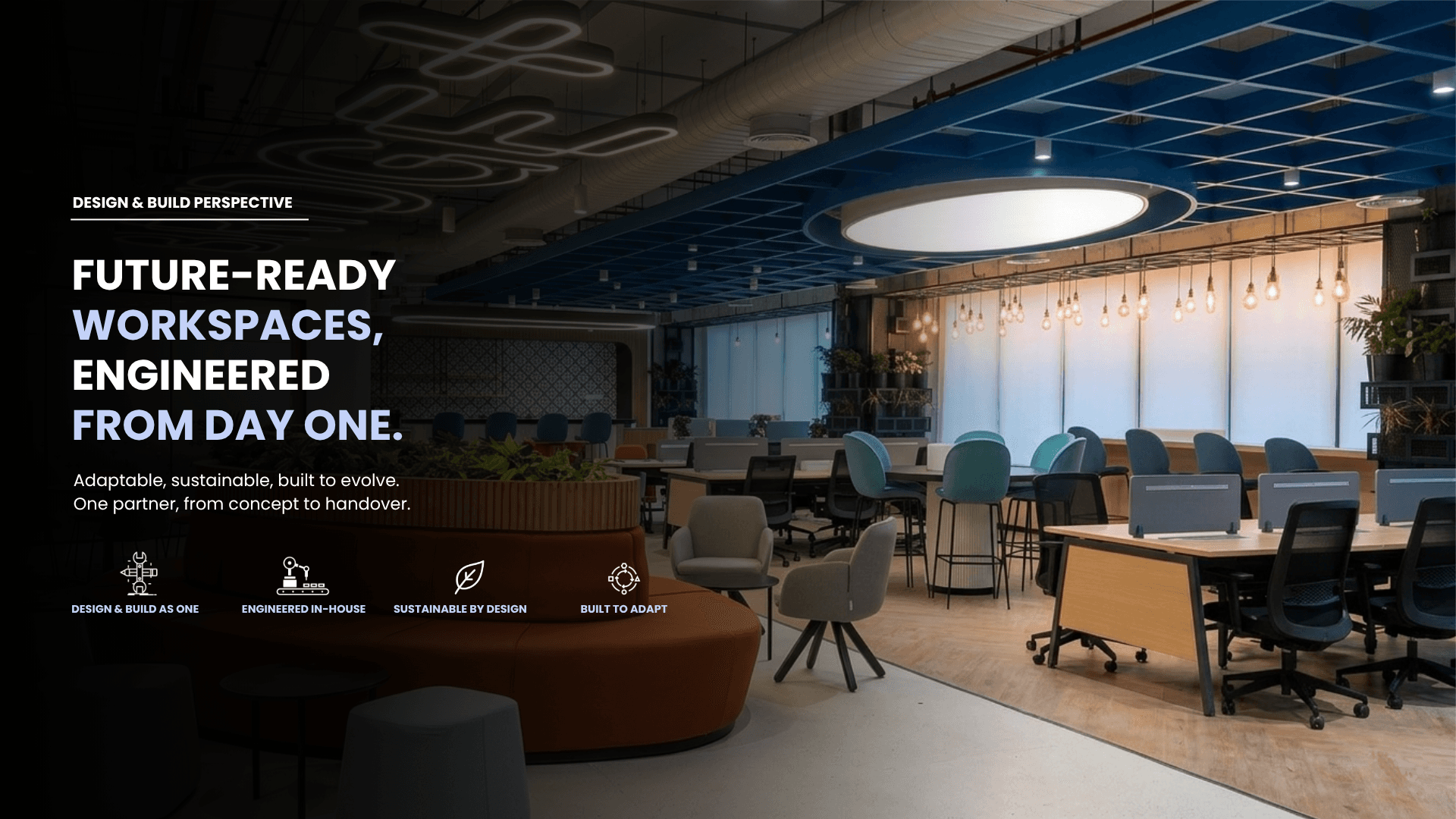
Future-ready workspaces aren't predicted. They're engineered by one team, from the first sketch to handover.

Introduction
Most offices are built for the company that signs the lease, not the one that will occupy them in three years. Teams grow, mandates shift, technology turns over, and a space that fit perfectly at handover starts working against the business it was meant to serve. Building for the future comes down to one thing: a workplace that can absorb change without being torn apart to do it.
Future-Ready Isn't a Prediction
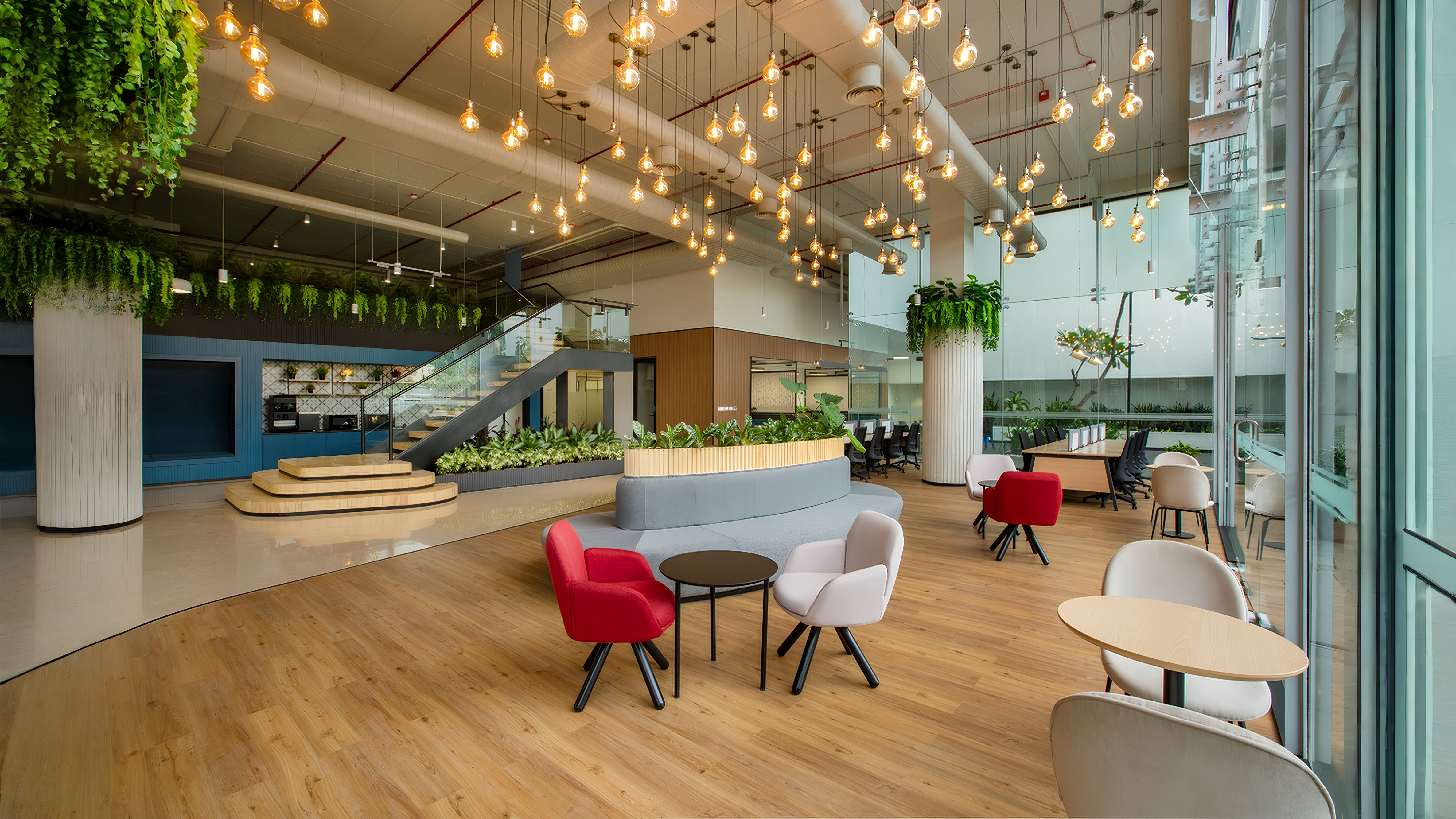
No one can forecast exactly what a workplace will need by 2030, and future-ready design doesn't try to. Instead of betting on a single scenario, it builds in range, layouts that reconfigure, services sized with headroom, systems that come apart and move without demolition. The value isn't in guessing right. It's in how cheaply you can change your mind later.
Where Projects Usually Break
Most of the value in a future-ready design leaks out at the handoffs. A designer draws the intent, a contractor prices it, a subcontractor builds it, and every handoff is a chance for the adaptable detail to get cut, the service run to clash, or the specification to drift. By the time the problems surface, they are inside the walls and above the ceiling, where fixing them costs far more than getting them right would have.
One Team, One Accountability
An integrated design and build model closes those seams. When the people who design the space, engineer the services, and build it work for the same firm, there is no handoff to lose intent across and no one to point at when something slips. Decisions get made once, against the same brief. Coordination happens in the room instead of across contracts, so the project moves faster and the specification that was promised is the one that gets delivered. At Ensemble, design, engineering, manufacturing, and project execution sit under one roof for exactly this reason.
Manufacturing Is Part of the Argument
The part that's easy to miss sits upstream of the site. A 1,25,000 sq. ft. in-house manufacturing facility means the furniture, joinery, and millwork are made to the drawing, not sourced against it. That control does two things for a future-ready brief: it holds the specification, and it lets components be built to move, reconfigure, and be reused as the floor plan changes. Design for manufacture and assembly is what turns 'adaptable' from a word on a slide into something you can actually unbolt and relocate.
Sustainability Belongs in the Structure
Future-ready and sustainable are the same decision made at the same moment. Orientation, daylight, material choices, and how the services respond to real occupancy are all set at the brief stage, and they shape the running cost of the building for as long as it stands. Bolt them on later and you pay twice. Engineer them in and the workspace gets cheaper to run every year it operates.
Speed Is a Strategic Outcome
Speed usually gets treated as a nice-to-have. It isn't. Every week a team spends waiting on a space is a week of disruption and paid-for square footage sitting idle. An integrated model compresses the schedule because design, procurement, and build run together rather than in sequence, and because clashes get caught in coordination instead of on site. Across 1,900+ projects, the pattern holds: the timeline shortens when one team owns the whole thing.
What It Means for the People Who Sign Off
For the people approving the budget, the case is practical. One partner instead of a chain of them. One number to hold accountable. A space that flexes with the business instead of forcing an early, expensive refit. Design and build isn't a procurement preference, it's the model that keeps the workplace working after everyone has moved in.
Conclusion
Building for the future isn't about guessing the next decade correctly. It's about removing the places where good design gets lost, and engineering adaptability, sustainability, and speed into the workspace from the first sketch. With design, engineering, manufacturing, and delivery under one roof across 23+ years and 1,900+ projects, that is the point of an integrated model: a workplace that performs on handover, and keeps performing long after the business it was built for has changed.