Your Office Is Running an Invisible Tax on Focus. Here's How to Fix It
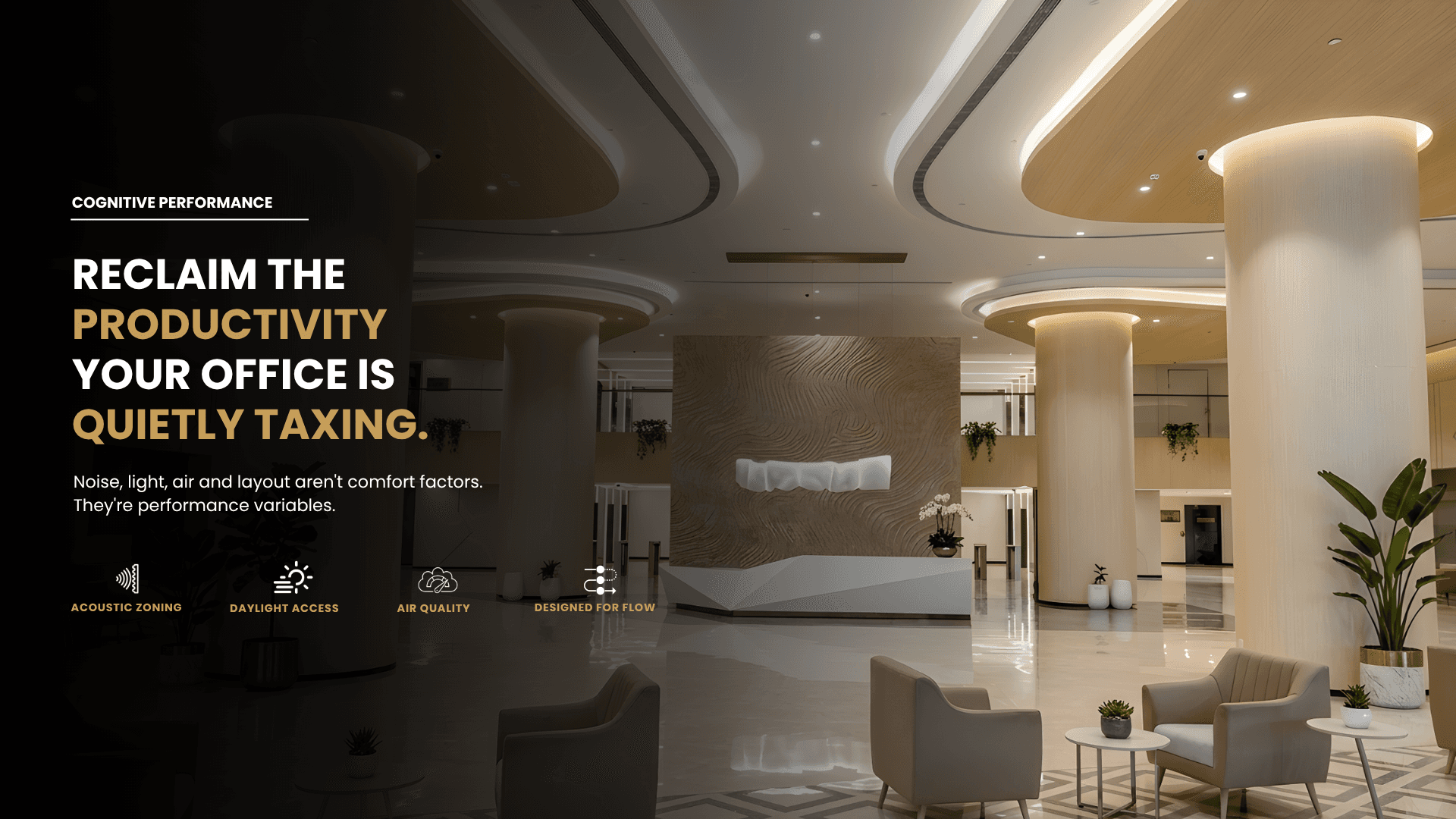
Noise, light, air quality and layout are performance variables, not comfort factors. What designing for cognitive performance actually involves.

Introduction: The Tax Nobody Reports
Somewhere in your office right now, someone is trying to think. Three conversations are happening within earshot on an open-plan floor, the lighting is too cold and too uniform, and the air was fine four hours ago. They are doing their best, and their best in that environment is a fraction of what they are capable of. Poor design taxes cognitive performance without ever appearing in a report, and the amount accumulates every working day.
What the Neuroscience Says About Noise
This is measurable rather than intuitive. Cognitive interruption from irrelevant speech, specifically speech rather than ambient sound, is one of the most documented performance inhibitors in workplace research. An open-plan floor without acoustic zoning forces the brain to suppress linguistic input actively, and that consumes working memory the task itself needs.
Light Is a Performance Variable
Exposure to natural light correlates with better sleep, which links directly to executive function, decision quality and emotional regulation. Offices that rely on cold, high-intensity overhead lighting disrupt circadian rhythms over time. The person sitting six rows from the nearest window is not working in the same cognitive environment as the person beside it.
Air Quality Sets the Ceiling
CO₂ concentration is a reliable proxy for cognitive performance. As it rises in poorly ventilated spaces, in long meetings and on densely occupied floors without adequate fresh-air exchange, decision quality measurably declines. The stuffy room after lunch is a ventilation failure, and it carries a cognitive cost.
Thermal Comfort Is Narrow
People who are too cold spend cognitive resources on thermoregulation, and people who are too hot lose alertness. The band that supports peak cognitive performance is narrow, and most offices fail to hold it consistently across zones and across the day.
Designing for Flow, Not Just Footfall
The best workplace design produces flow rather than admiration on a tour. Flow is the state of deep, uninterrupted work where output quality runs dramatically above baseline, and it depends on psychological safety, clear zoning that separates focus from collaboration, and sensory calibration across acoustics, light and temperature. Those conditions have to be specified, because none of them occurs by accident.
The Practical Response: Zoning and Daylight
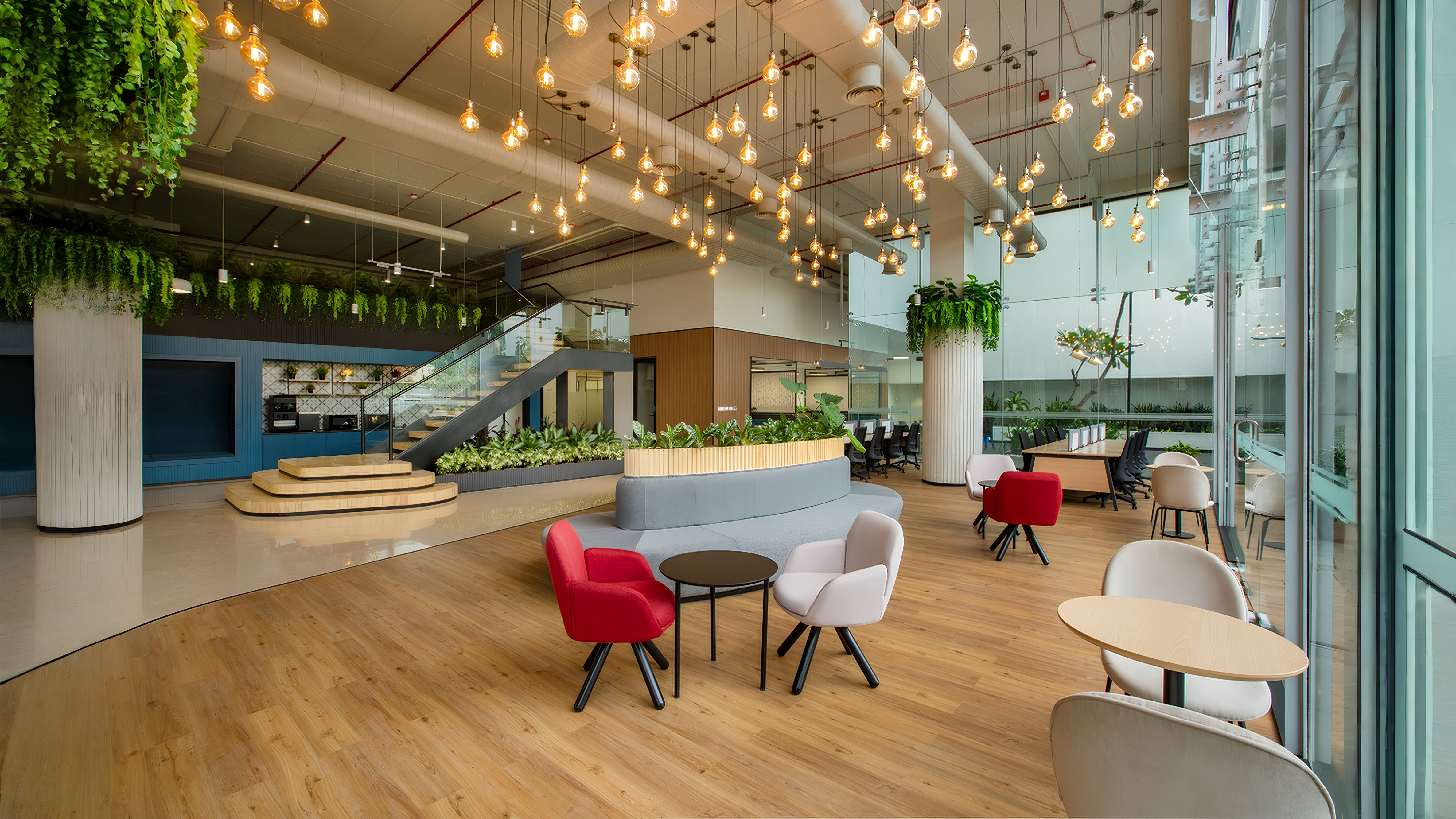
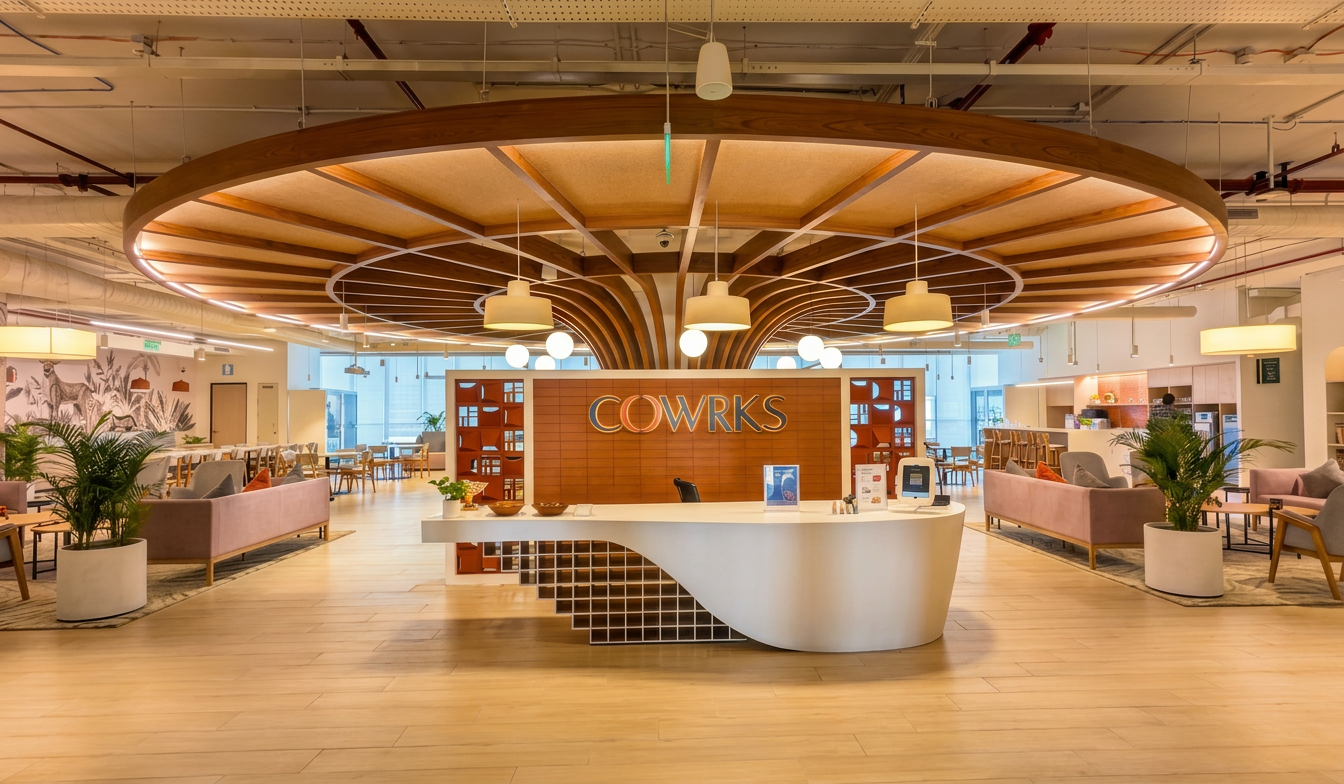
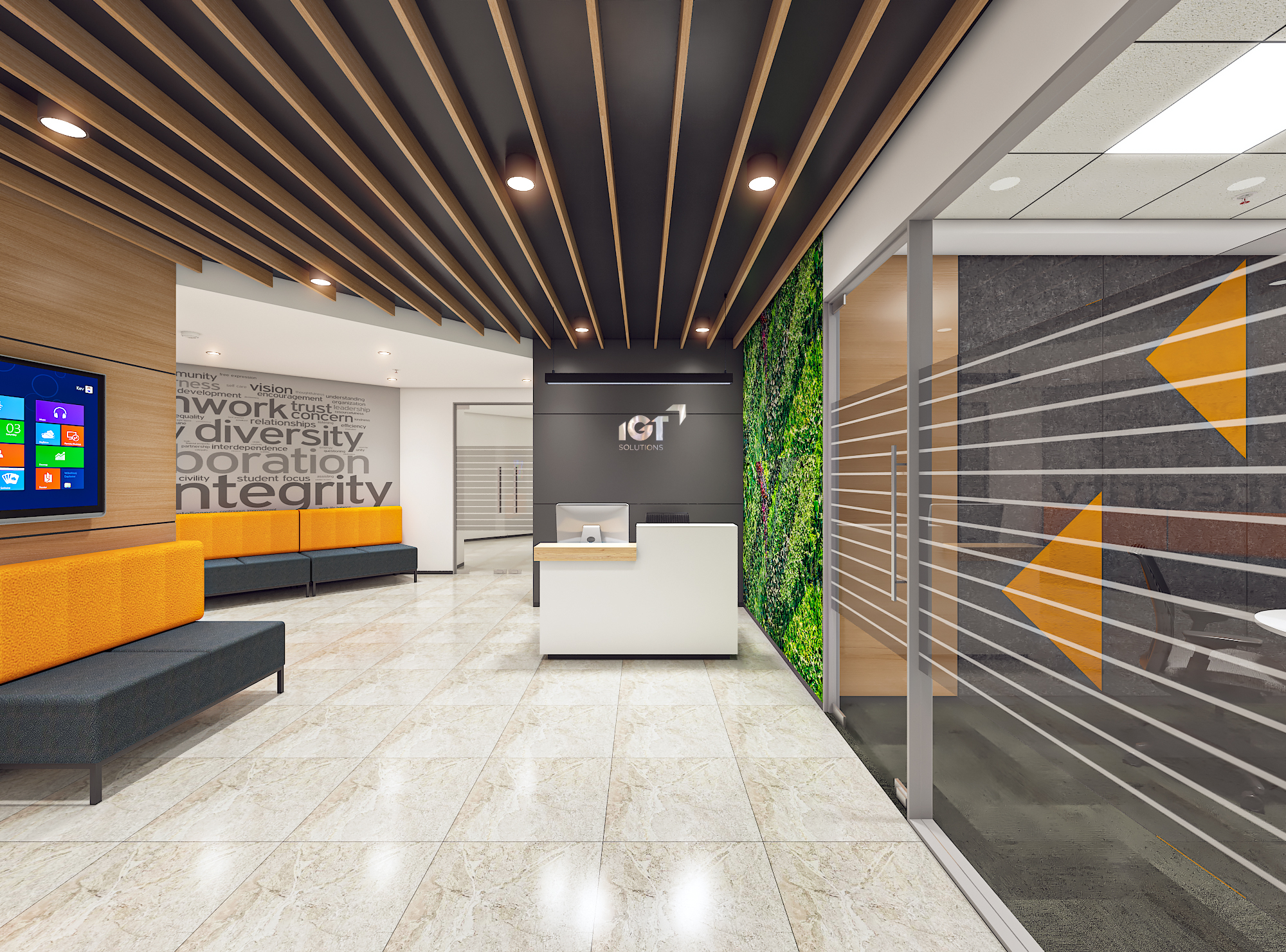
A well-designed workplace holds at least three acoustic environments: a collaborative zone, a semi-quiet focus zone, and a properly treated quiet zone for deep work. Daylight belongs in the performance specification alongside them, not in the aesthetic one. Workstation placement relative to glazing, and high-reflectance surfaces that push light deeper into the plate, deserve the same scrutiny as any technical spec.
Movement and Biophilia as Infrastructure
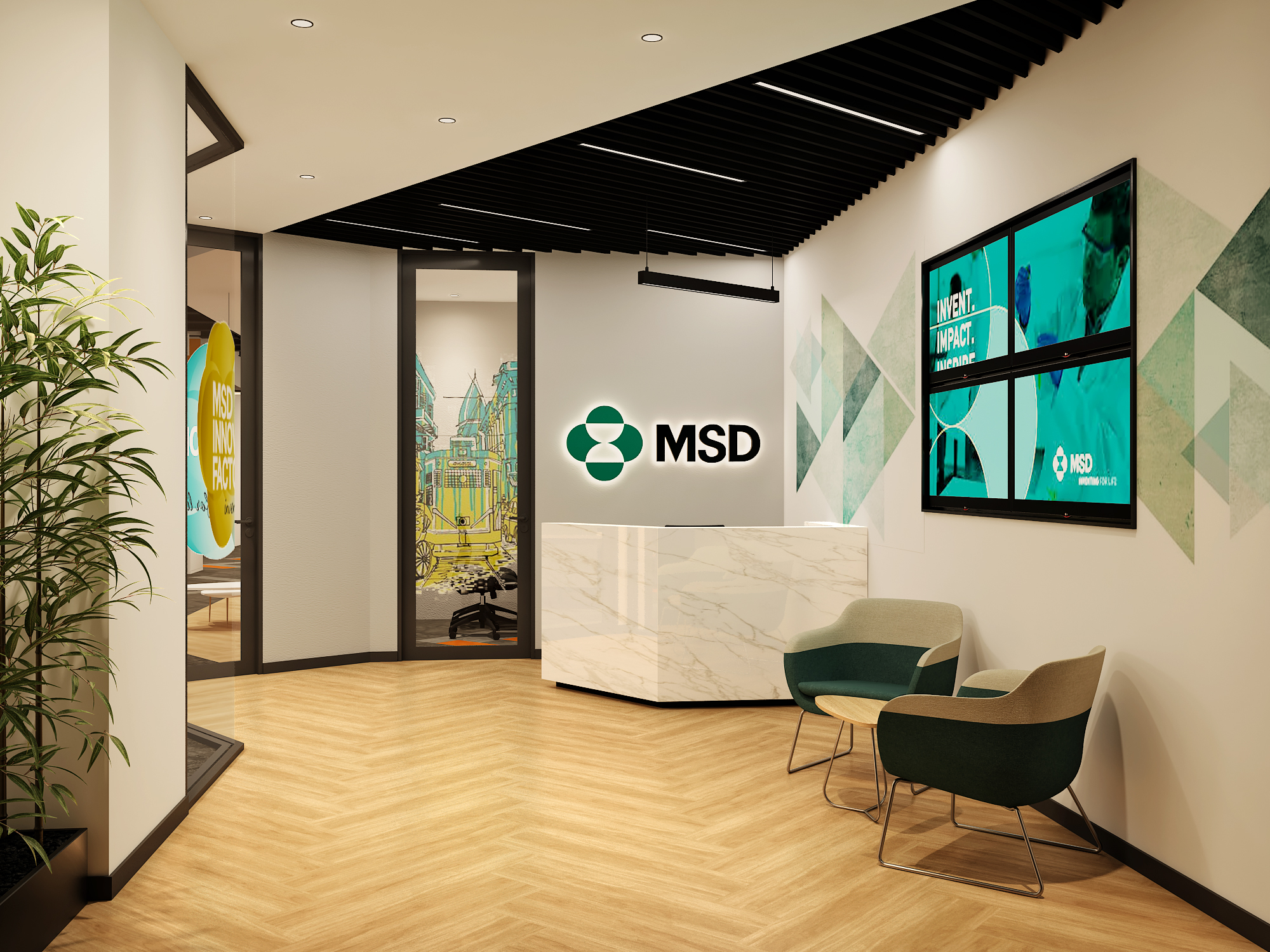
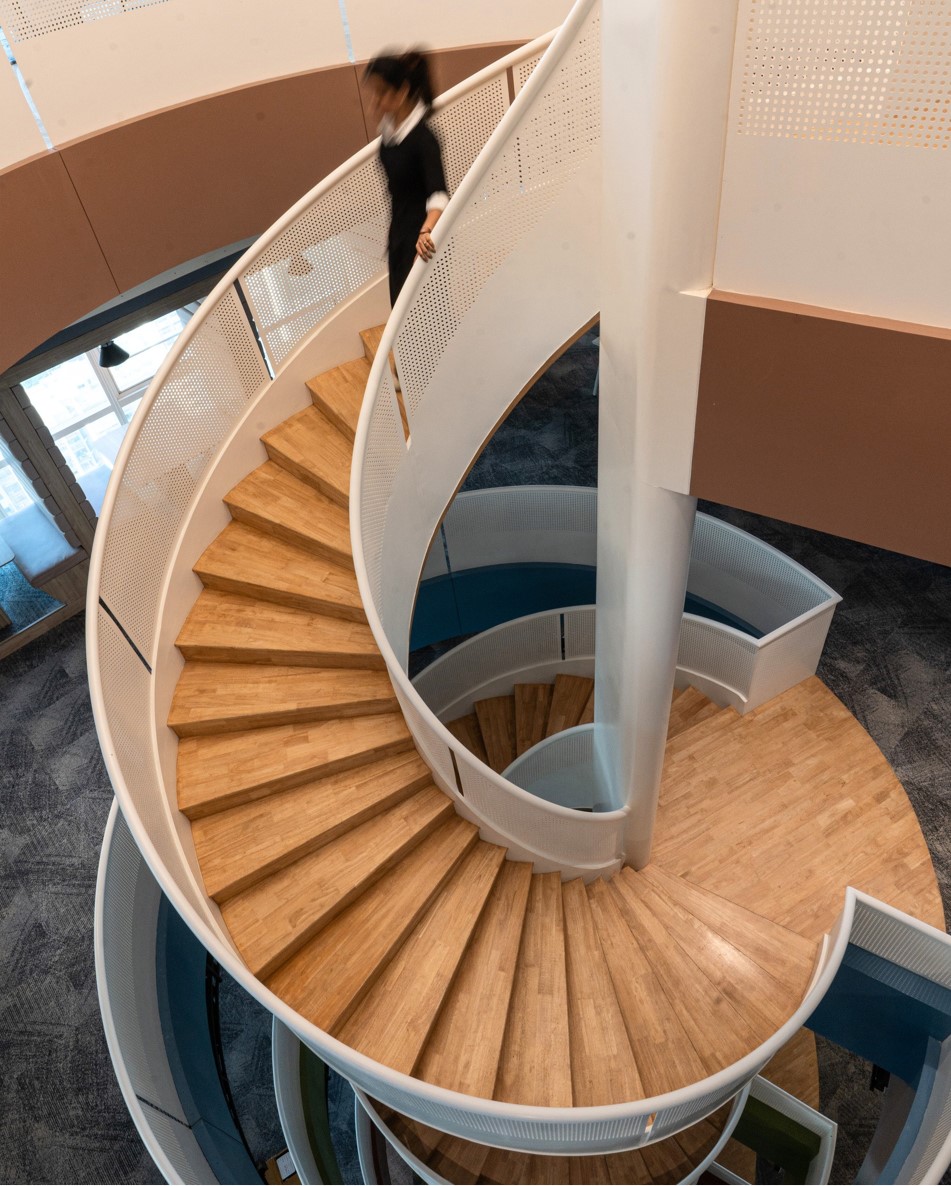
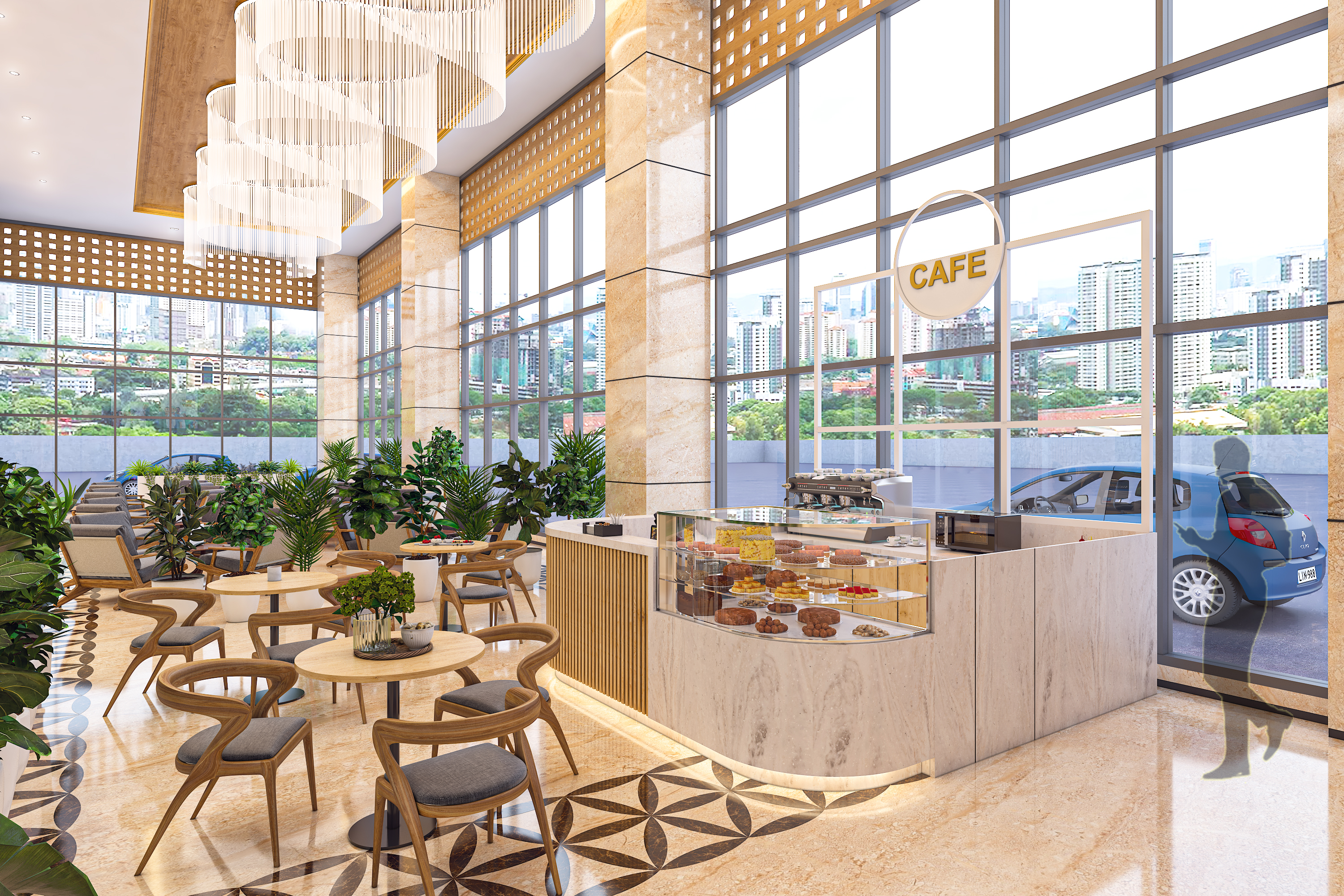
Static environments reduce cognitive agility. The brain benefits from changes in posture, visual distance and context, which is what standing-height surfaces, lounge zones and routes that encourage incidental movement are for. Biophilic elements, meaning natural light, natural materials and views, have documented effects on stress and attention. MSD and KPMG both treated cognitive precision as a design specification rather than an afterthought.
The Competitive Implication
Organisations that take cognitive performance seriously are not running a wellness initiative. They have worked out that the quality of their people's thinking is the limiting factor on business outcomes. A 10% improvement in the decisions a 200-person team makes over 250 working days is not a rounding error, and it compounds. The physical environment is one of the few variables in that equation an organisation fully controls. Across 1,900+ projects and 23+ years, Ensemble has designed for it deliberately.
Conclusion
Cognitive performance is the most valuable output of a modern workplace and one of the most controllable. Acoustics, light, air and layout set the operating conditions for good thinking. Specify them properly and the invisible tax stops being levied, on every floor, every working day.